Case study 1
The 2004 Prius motor, against the measurements.
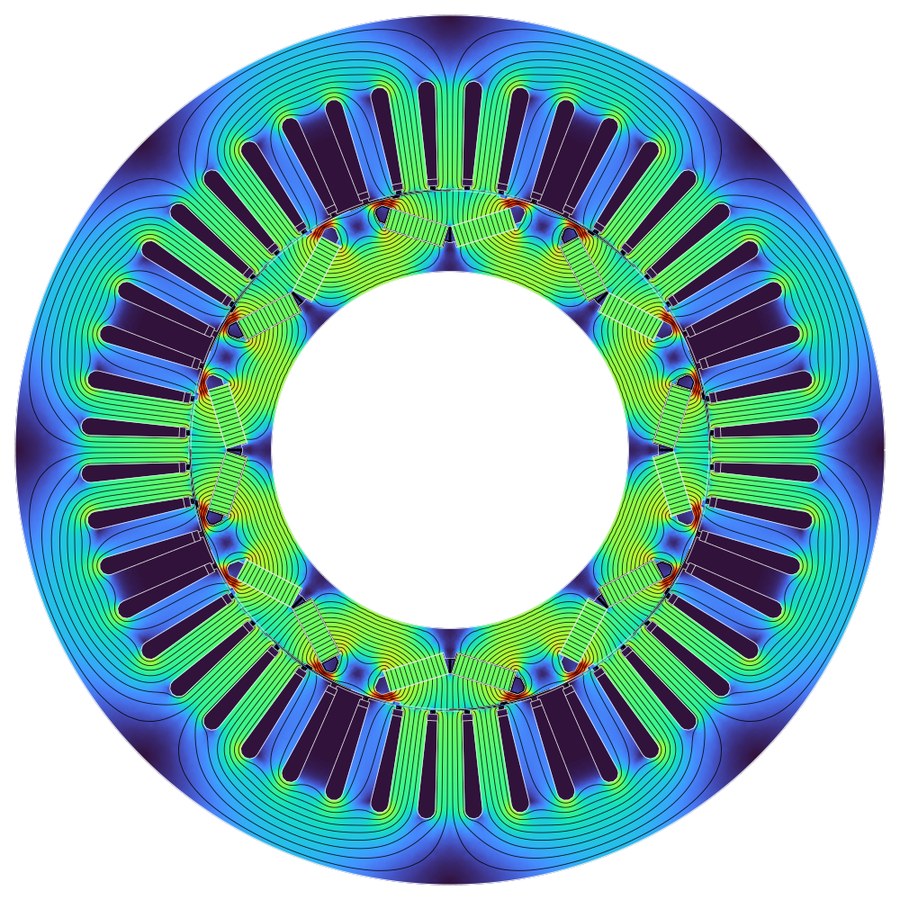
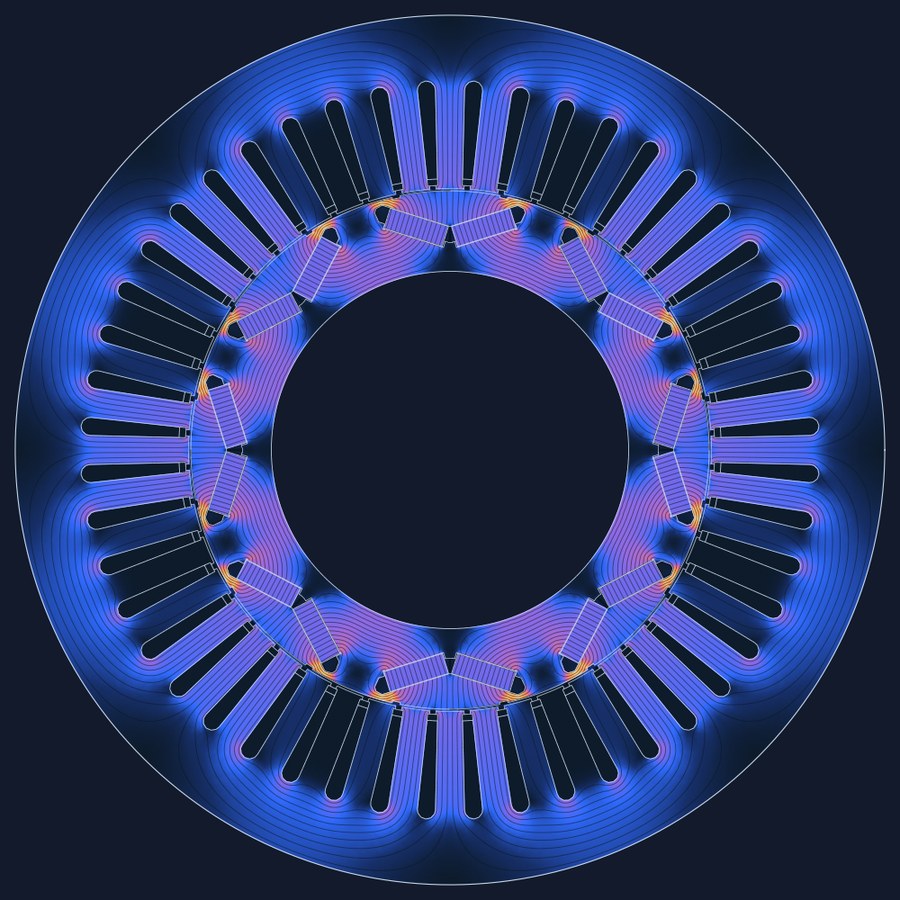
We validate ElectroLeap on machines with published test data. The first is the traction motor of the 2004 Toyota Prius, tested by Oak Ridge National Laboratory.
- Machine
- 2004 Toyota Prius traction motor, 50 kW, 8 poles, 48 slots, V-shaped interior magnets
- Measurements
- Oak Ridge National Laboratory, ORNL/TM-2006/423 (Staunton et al., 2006) and the related ORNL reports
- Model
- Geometry from the published lamination drawing; winding and resistance as published
- Solver
- ElectroLeap finite element solver, end to end: geometry, mesh, field, torque, losses and efficiency
What was calibrated
Two parameters, each fitted to its own measurement, and stated here so the comparisons below can be read for what they are:
- the magnet remanence, set so the no-load back-EMF matches the measured constant. With the published magnet data the model reads 17 % higher, so the effective remanence of the assembled rotor is lower;
- one iron-loss build factor, fitted on the measured no-load rotor loss.
Nothing was fitted on the locked-rotor torque or on the efficiency map.
No-load voltage against speed
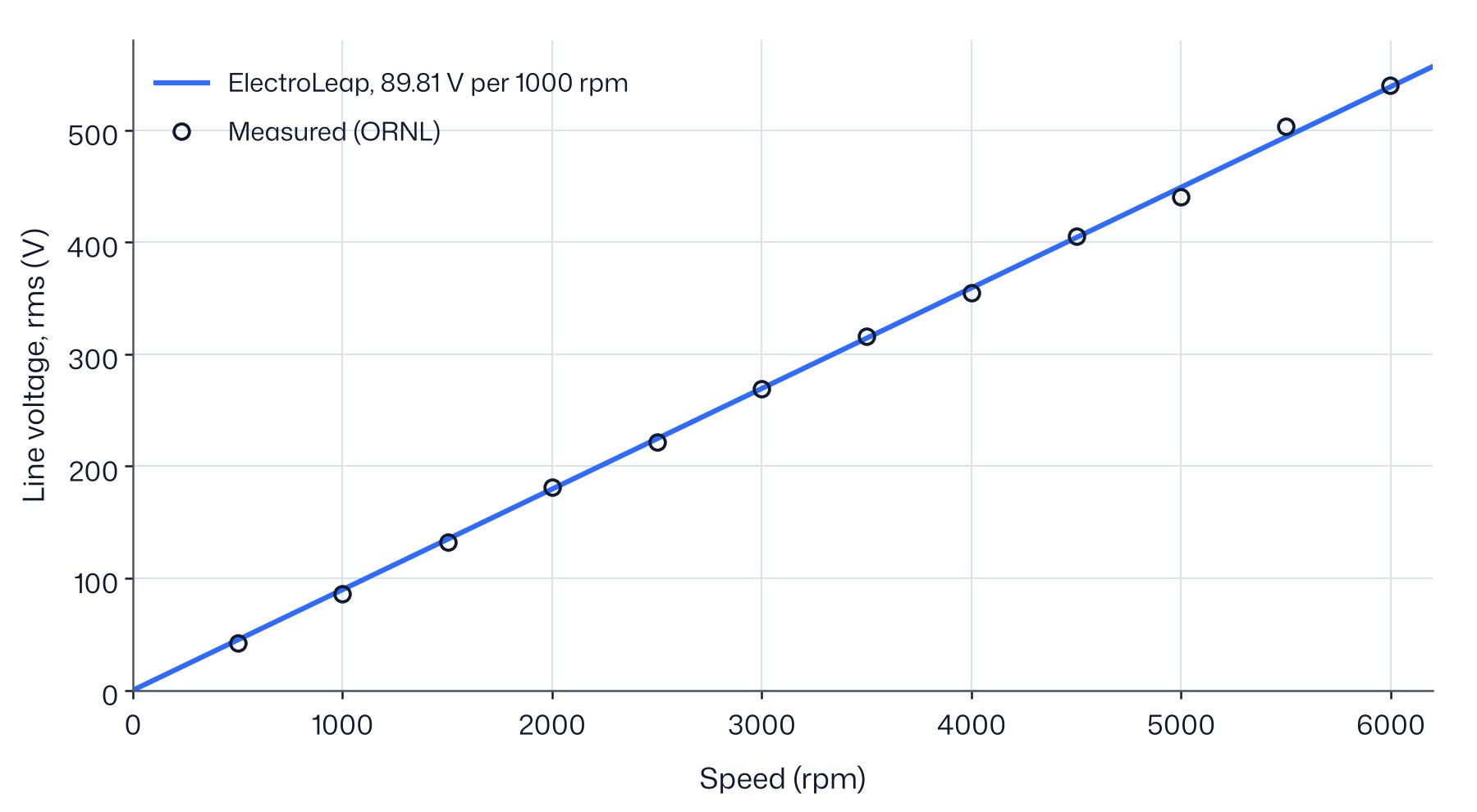
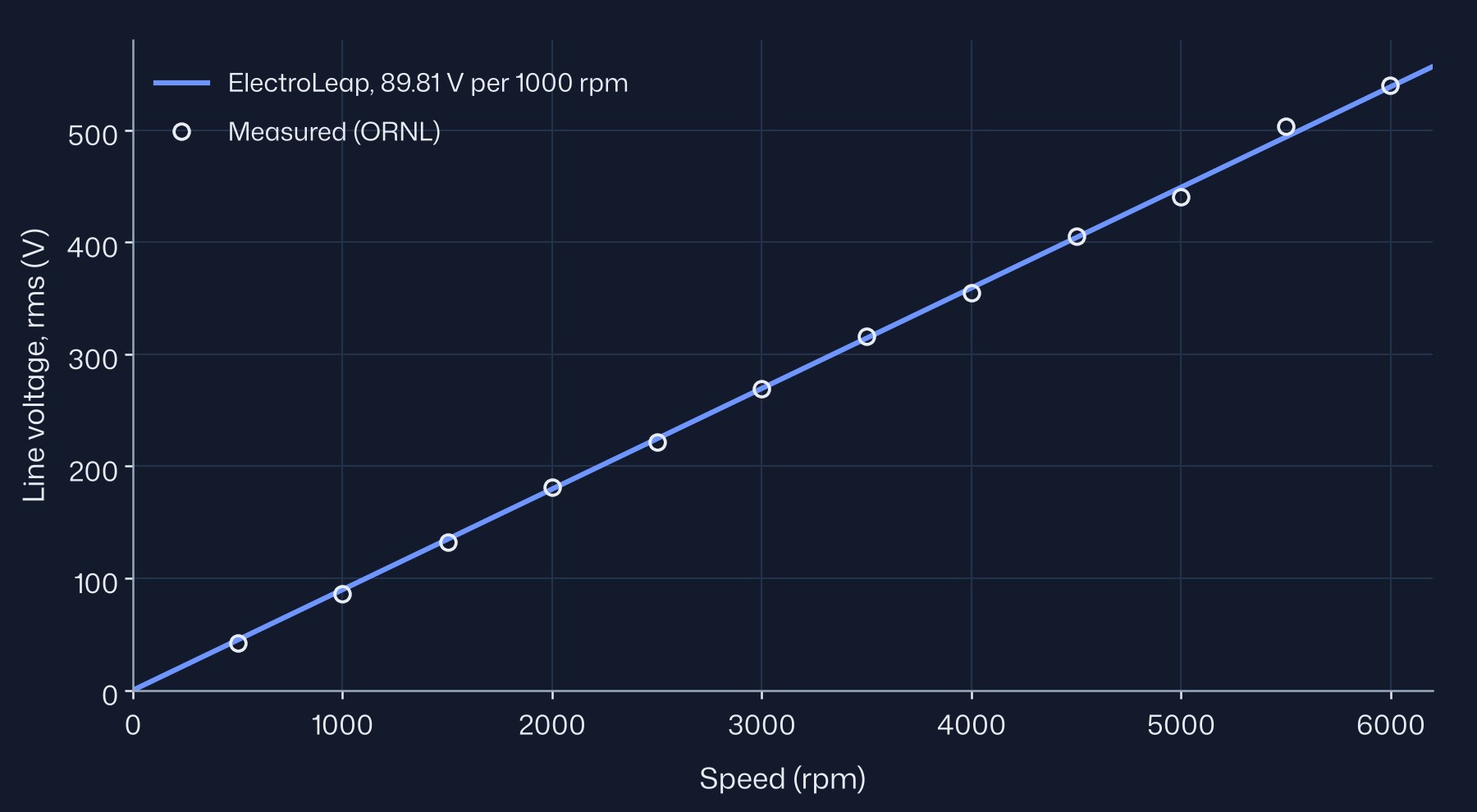
Line voltage at no load from 500 to 6000 rpm, with the twelve measured points. The slope, the back-EMF constant, is what the magnet remanence was calibrated on, so it agrees by construction: 89.81 against 89.78 V per 1000 rpm. The check here is the linearity: from 1500 rpm up, every measured point is within 2 % of the line; the two lowest speeds read 5–7 % low on the measurement. The technical note also compares the waveform and its harmonics, which were not calibrated.
Locked-rotor torque
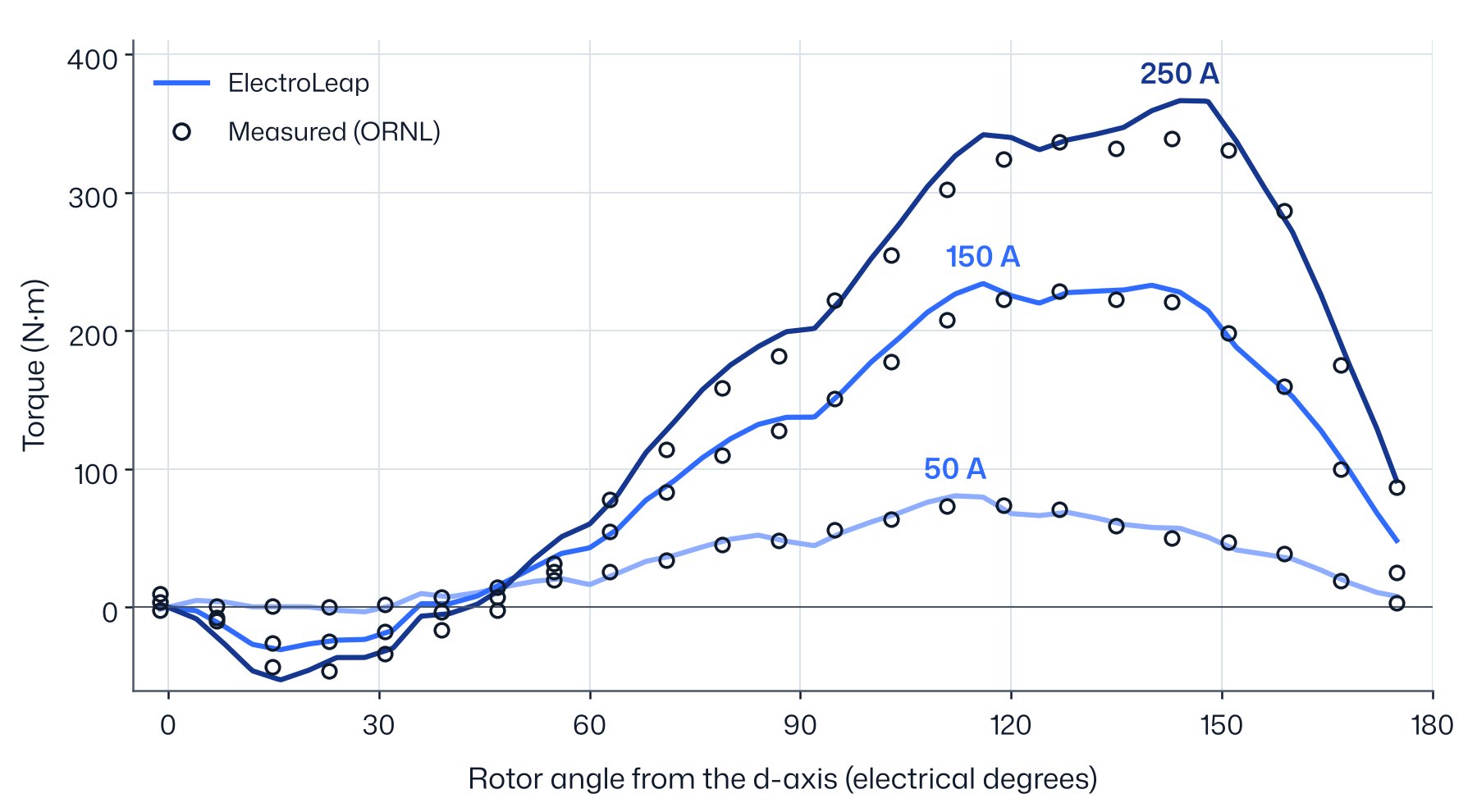
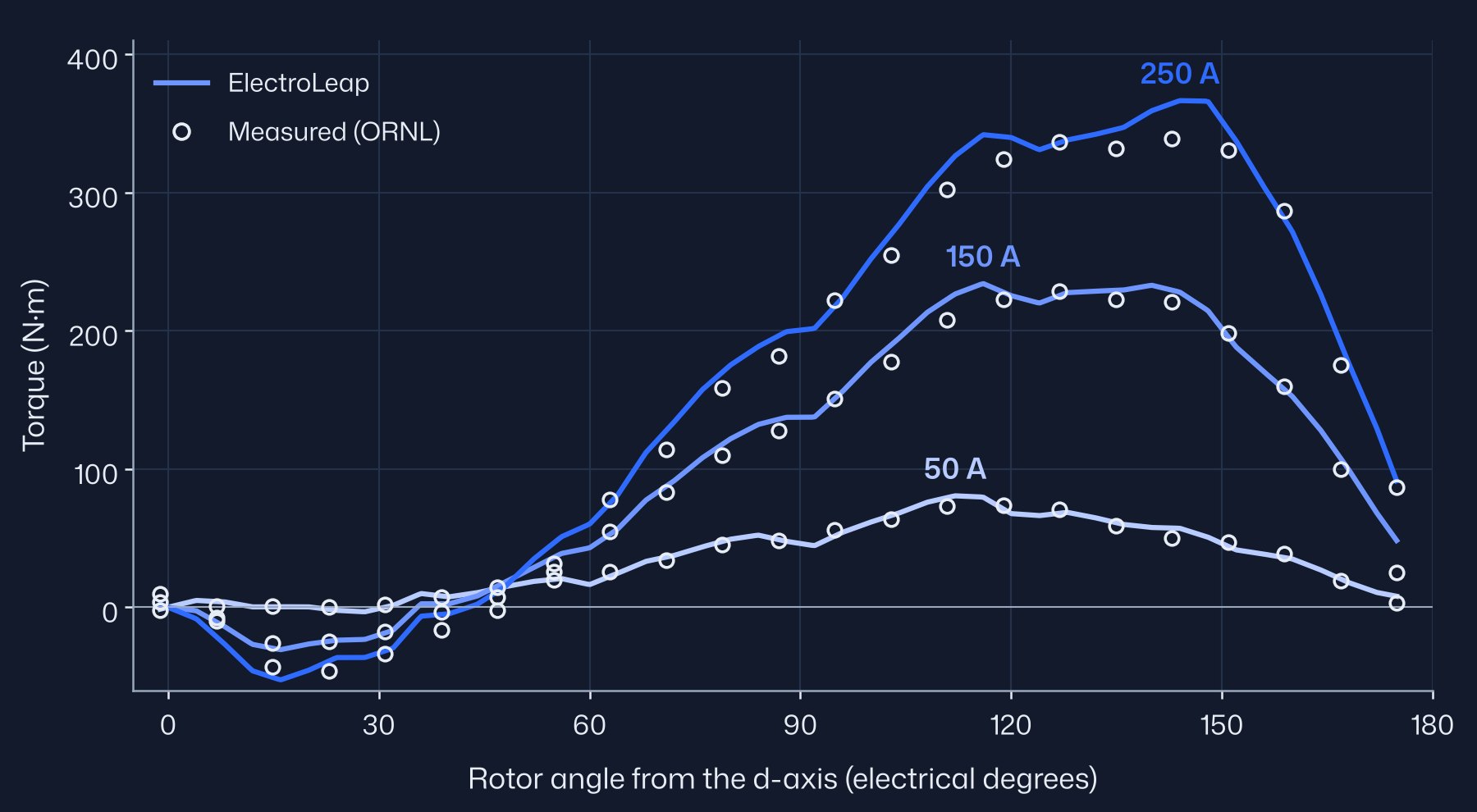
Torque against rotor angle at 50, 150 and 250 A, with the measured points. Nothing was fitted on the torque. The computed curves follow the measurement across the whole range, including the negative torque at small angles and the peak moving to larger angles as the reluctance torque grows with current. From 75 to 150 A the peak torque is within 3 % of the measurement, and within 8 % at every current from 50 to 250 A.
Efficiency map
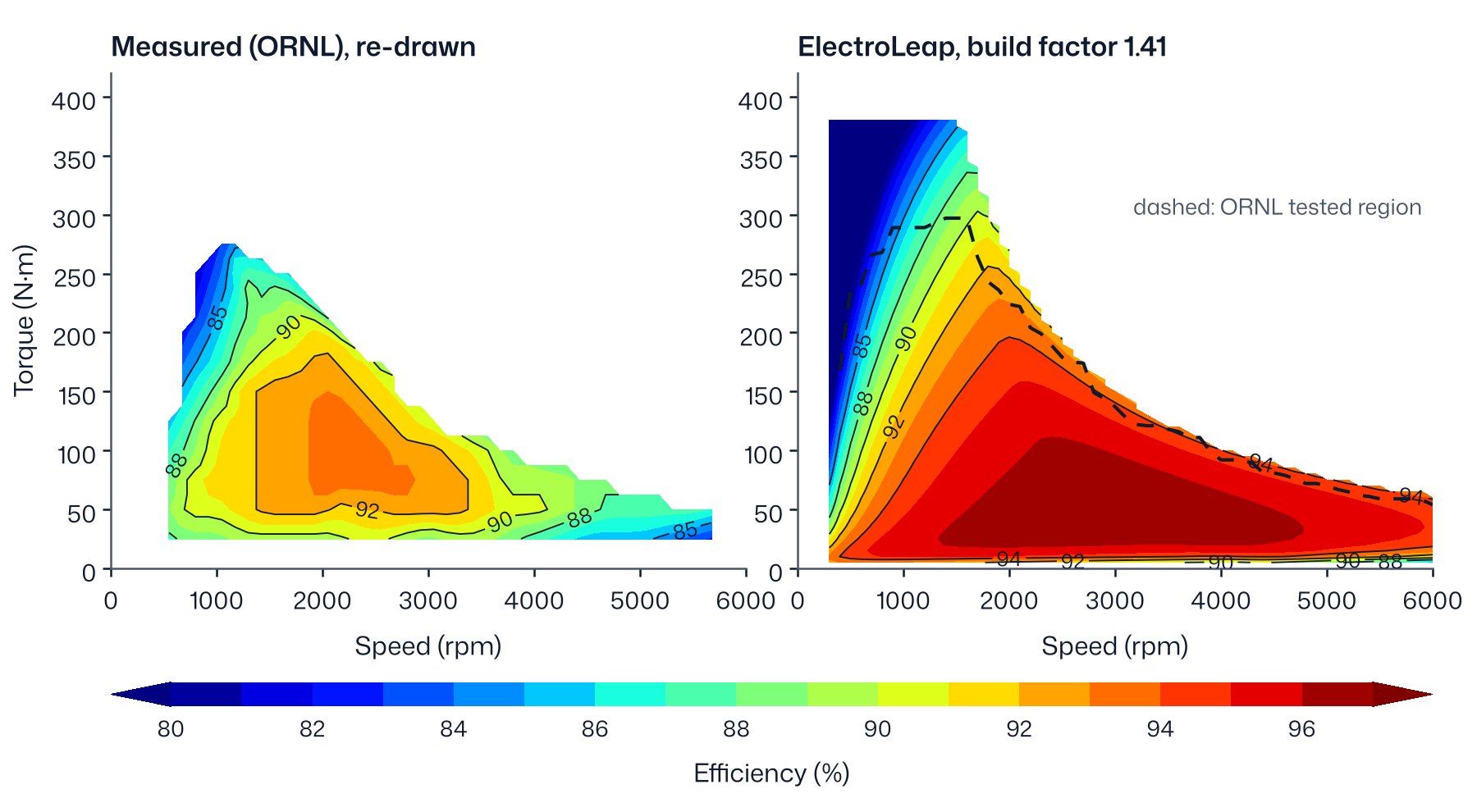
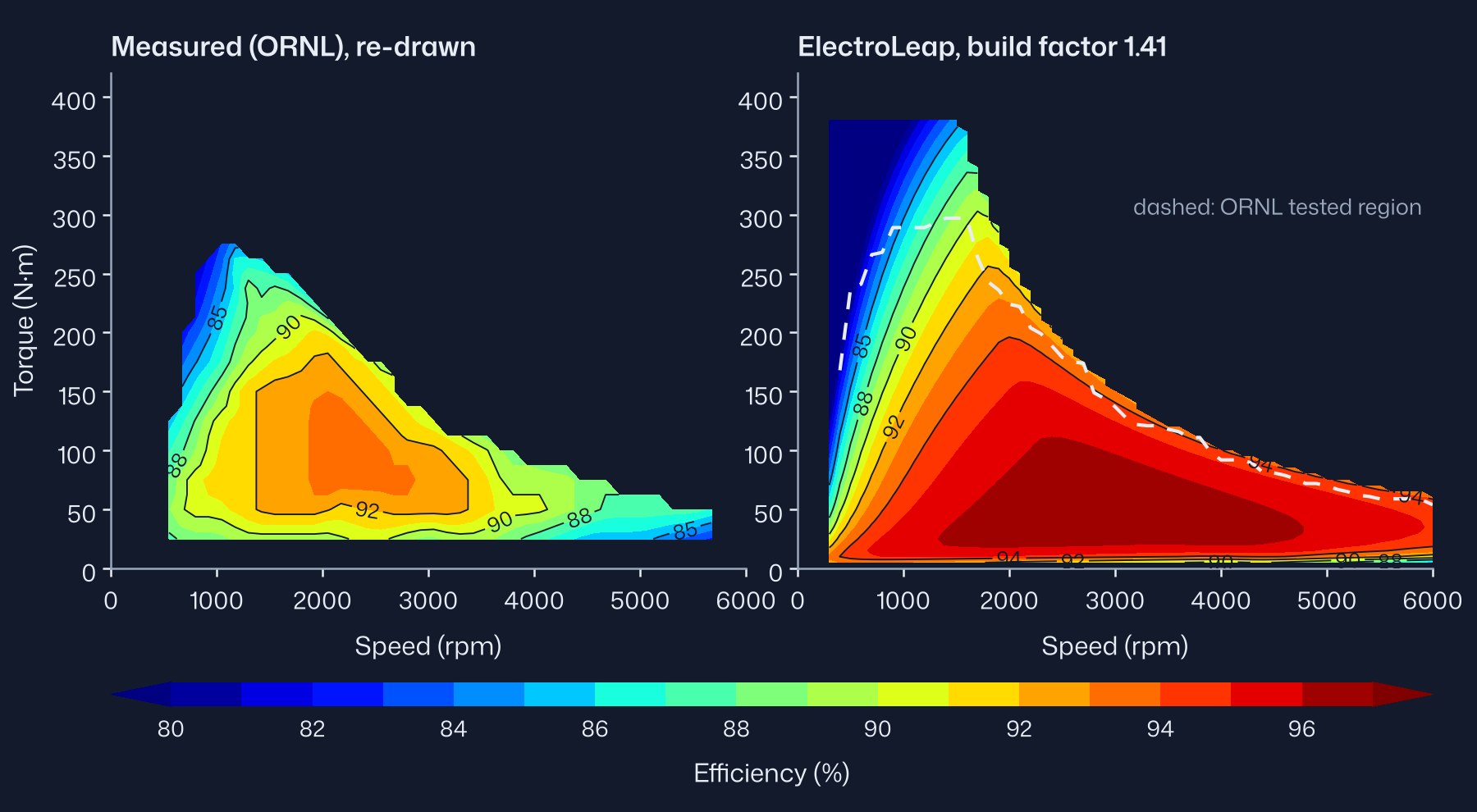
The measured map beside the model. The model uses sinusoidal currents and leaves out mechanical losses (bearings, windage, oil) and the extra losses from the inverter switching, so it reads higher than the measurement: by 4.5 % on average over the 94 measured points, most at light load, where those losses weigh most against a small output.
The full results
The technical note has the full comparison on this motor: back-EMF and its harmonics, the air-gap field, locked-rotor torque at seven currents, load points and a voltage sweep at 900 rpm, no-load loss, the efficiency map and the torque–speed envelope. Each comes with its figure, its difference from the measurement, and what we think causes it.
Measured data: Oak Ridge National Laboratory, ORNL/TM-2006/423 (Staunton et al., 2006). The authors are not affiliated with ElectroLeap and have not reviewed this work.