Private beta coming soon
Finite element analysis software
for PM machine design.
Define the machine, run finite-element analysis on every core of your computer, and get its performance. Confidential by design: nothing is sent to the cloud, so your designs and your IP never leave your PC.
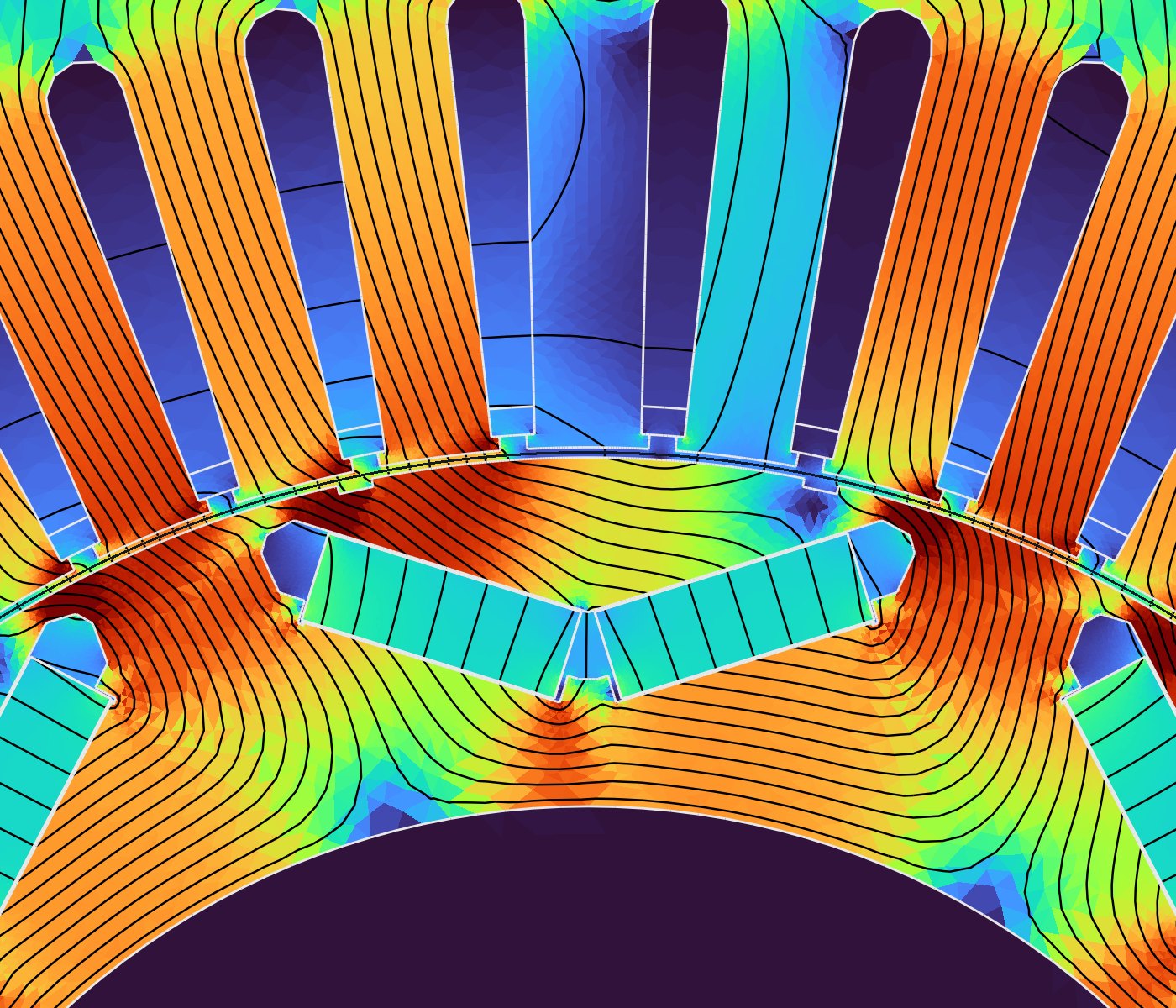
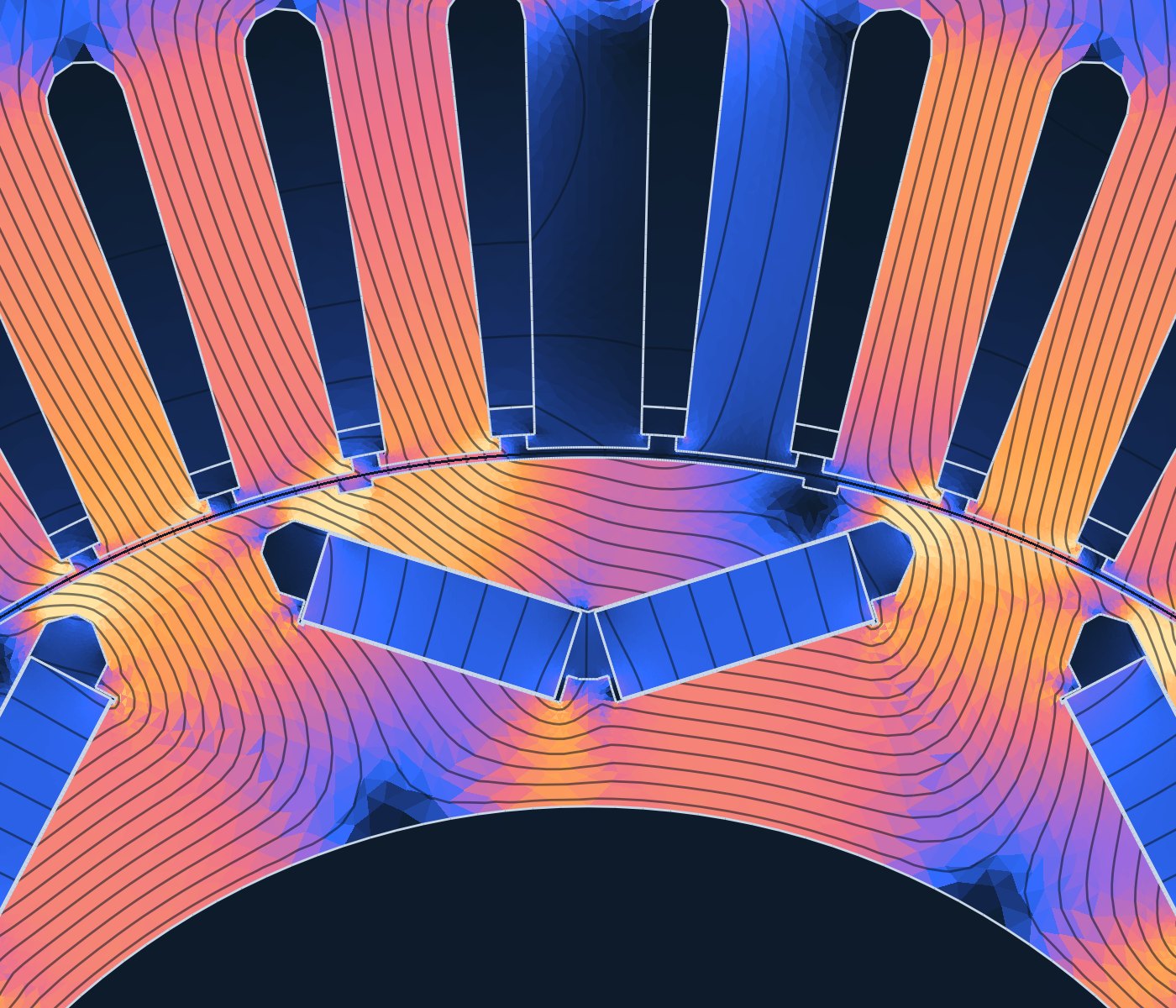
Your designs stay on your PC
The software is installed on your computer and the solver runs locally.
Every core, no tokens
Run as many designs in parallel as your machine allows. No core licences are required.
Checked against a tested motor
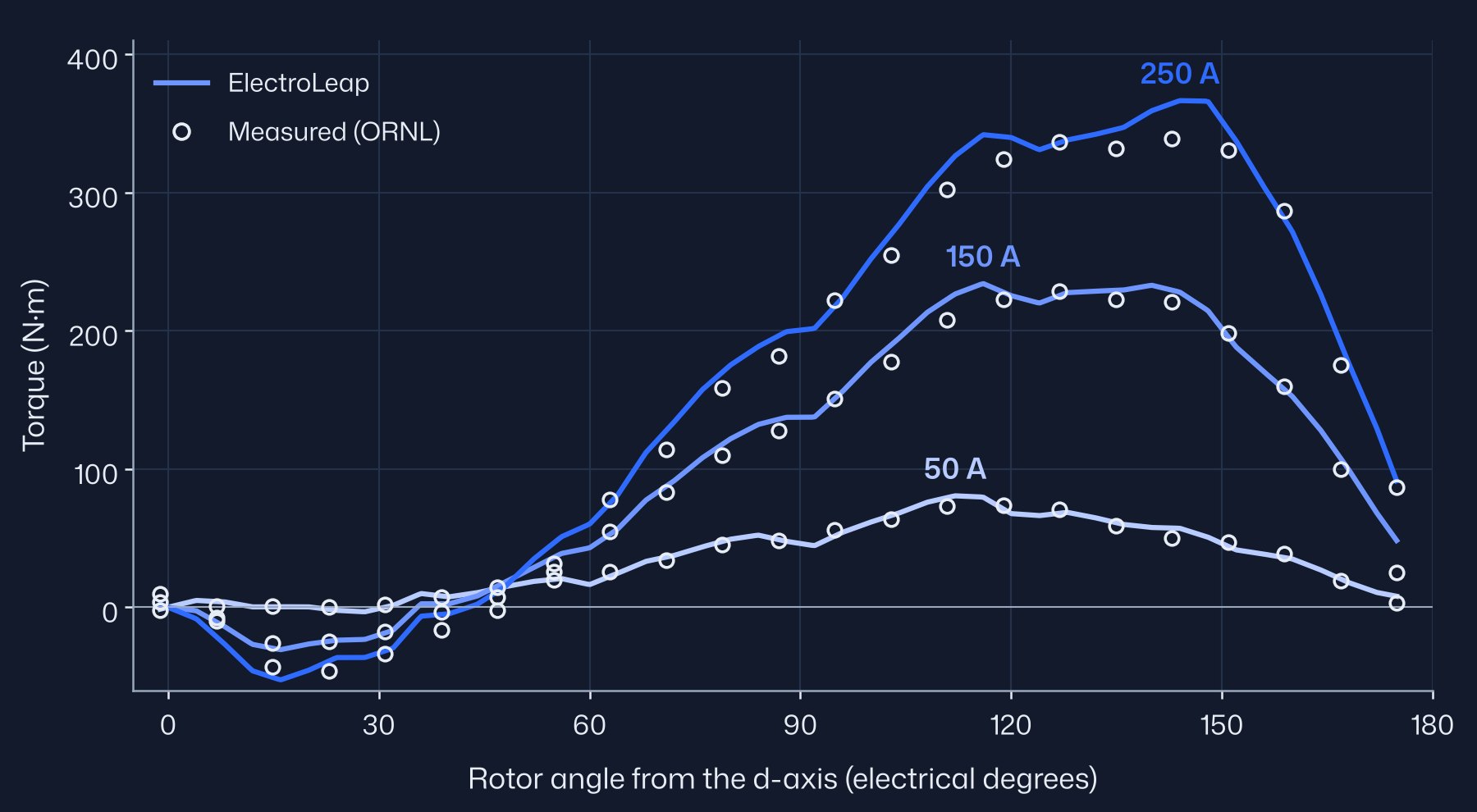
Results compared with the published test data of the 2004 Prius traction motor. More validations will be published.
From dimensions to torque in minutes.
- 1
Define
Select a rotor template and set slots, poles and dimensions. The drawing updates as you type.
Slots48Poles8Outer diameter264 mmAir gap1.0 mmV IPMSurfaceSpoke - 2
Solve
Finite-element analysis runs on every core of your PC, with progress for each analysis.
Load waveformdoneNo load and coggingdoneFlux map62 %Designs solve in parallel, one per core.
- 3
Review
Torque, back-EMF, cogging, flux maps, torque–speed and efficiency maps, with a PDF report.
Average torque85.2 N·mRipple6.4 %
What you can compute
The current version covers radial-flux permanent-magnet machines: surface PM, IPM flat, V and double V, spoke and U rotors, and two-layer rotors.
See the productBeta
expected early 2027- Load and no-load waveforms
- Cogging torque and ripple
- Back-EMF and harmonics
- Ld and Lq
- Flux maps
- Torque–speed curves
- Core, copper and magnet losses
- Efficiency maps
- Step skew
More features will follow, to extend what you can compute and to make the design process smooth and valuable.
Validated, not just fast.
Every release is checked against reference solutions and against the measurements published by Oak Ridge National Laboratory on the 2004 Toyota Prius traction motor: no-load voltage against speed, locked-rotor torque across the full angle range and the motor efficiency map.
See the validation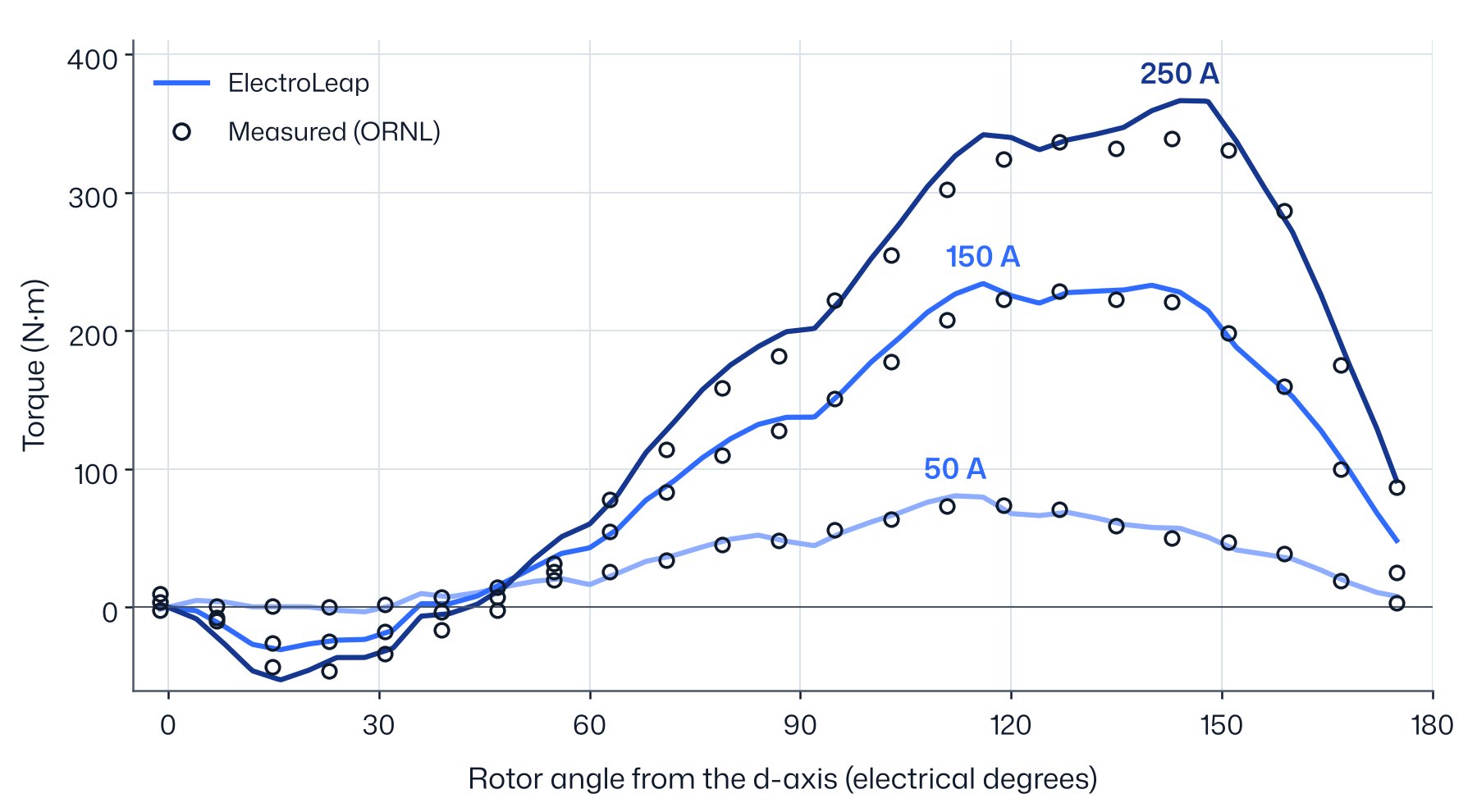
Need help with a design?
Our engineers design and review electric machines for aerospace and automotive programmes, and provide engineering intelligence and patent analysis.
Free during the beta.
For students, researchers and professors. Strictly non-commercial use. Stays free after launch.
Request academic accessEvery beta feature and every core of your PC, by invitation.
Request beta accessEvaluate ElectroLeap on one of your own machines, with direct support from our engineers.
Talk to an engineer